Critical Thinking Skills In 2026’s Job Market
Most corporate or high-paying roles require data-driven workflows and amazing analytical skills. That is why strong critical thinking skills can be the deciding factor between a standout employee and an average one. Employers across industries increasingly seek candidates who can analyze information, solve complex problems, and make sound decisions amid uncertainty.
In fact, one recent survey by Potomac Education of 501 executives found 78% of employers rate critical thinking as the most important skill in their employees.
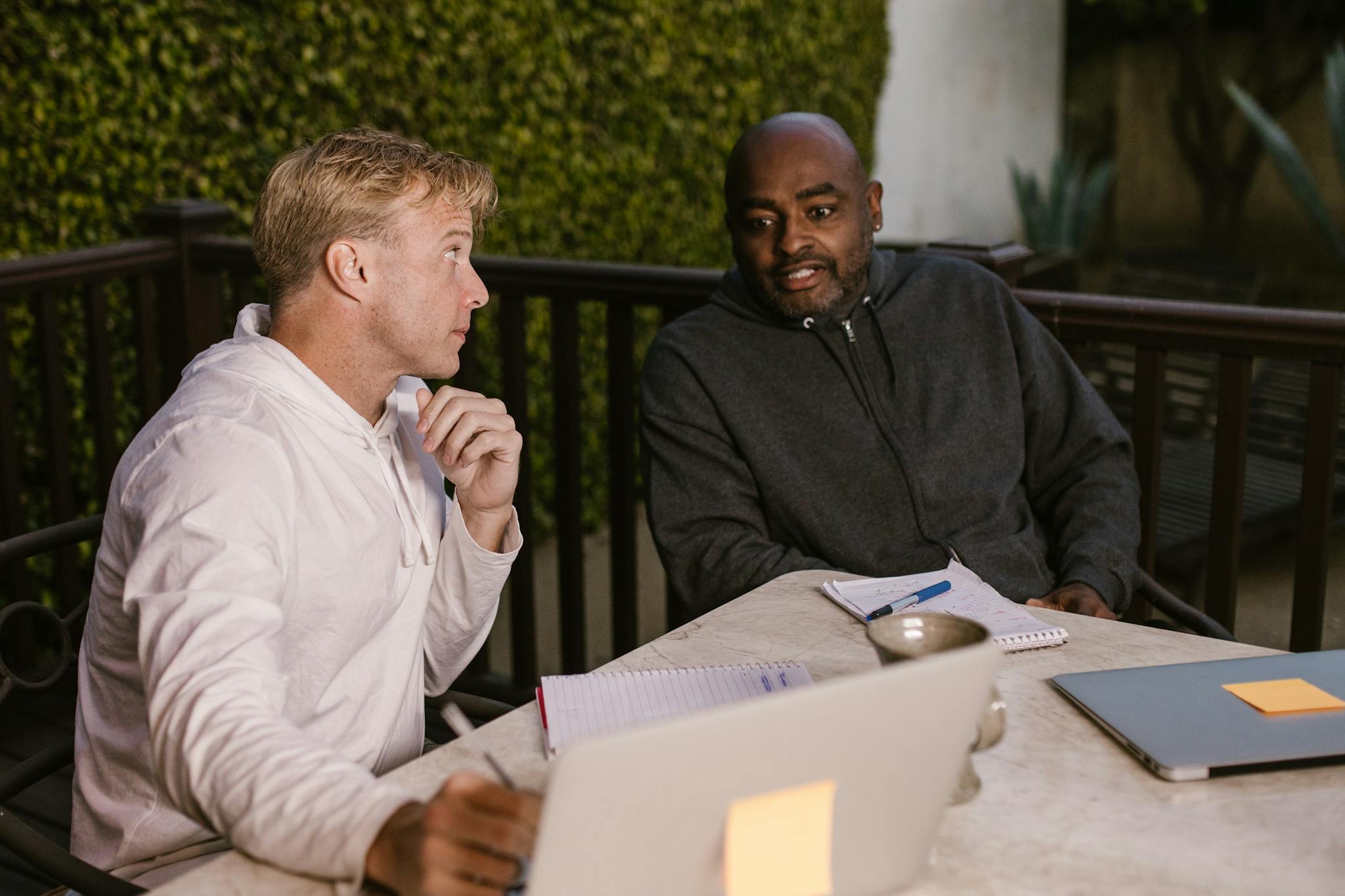
Critical thinking is one of the top skills employers look for because it helps workers analyze information, solve complex problems, and make sound decisions in fast-changing environments. It’s essential across all sectors, from healthcare and engineering to business, law, and education. Employers assess it through scenario-based interviews, real-world problem tasks, and structured reasoning tests. Students and professionals can strengthen this skill by asking deeper questions, seeking diverse perspectives, practicing structured problem-solving, reflecting on their thinking, and challenging assumptions. Developing critical thinking improves job performance, adaptability, and long-term career growth.
Why Critical Thinking Is Crucial in the Modern Workforce
In the 21st-century workplace, critical thinking has emerged as a cornerstone skill for success. The rapid pace of technological change, globalization, and automation means workers at all levels encounter novel challenges and a constant influx of information. Critical thinking equips professionals to navigate complex situations with clarity and logic, rather than relying on assumptions or guesswork. Research by the Central Washington University shows that employees with strong analytical and critical thinking skills make better decisions, solve problems more effectively, and adapt faster to changing circumstances.
What is expected in the workplace?
Employers and experts note that routine tasks are increasingly automated, so human workers add the most value by handling the complex cognitive tasks that machines can’t. This includes analyzing ambiguous data, identifying patterns or insights, evaluating options, and exercising judgment in uncertain situations. It’s no surprise then that major reports rank critical thinking among the top “future-proof” competencies. For example, LinkedIn has year after year listed critical thinking as one of most wanted skills by employers.
In short, critical thinking is essential for innovation, effective decision-making, and continuous learning, attributes needed to thrive in modern workplaces.
A skill for every current and future professional
Crucially, critical thinking isn’t just for particular jobs; it underpins success across all careers and sectors. This skill helps professionals approach challenges with logic and evidence, whether it’s a marketer planning a campaign or a nurse diagnosing a patient. Critical thinking applies to every field, enabling individuals to process information and form well-reasoned judgments in any role. Workers who can think critically bring a mindset of problem-solving and adaptability that employers know is vital for keeping organizations agile and competitive.
Jobs That Rely on Critical Thinking Across Industries
Critical thinking isn’t confined to any single profession, it’s a valued skill in virtually every industry. Employers from tech startups to hospitals to government agencies all seek team members who can evaluate information and devise logical solutions. Here are just a few examples of jobs that need critical thinking on a daily basis:
- Healthcare and Medicine: Doctors, nurses, and other health professionals must rapidly assess patient symptoms and medical data to make life-saving decisions. Every diagnosis or treatment plan requires analyzing evidence and weighing alternatives – a prime example of critical thinking in action. For instance, a nurse in an emergency room uses critical thinking to triage patients by urgency, and a physician must interpret lab results to determine an accurate diagnosis.
- Technology and Engineering: Roles in IT and engineering demand advanced problem-solving. Software developers debug complex code and design systems by logically working through constraints, while data analysts interpret trends from raw data to guide business strategies. These professionals constantly ask “What is the data telling us?” and “How can we solve this technical challenge?”, demonstrating critical thinking as they create and improve products.
- Business, Finance, and Management: From project managers to accountants and business analysts, professionals in this arena rely on critical thinking to make organizations run efficiently. An accountant, for example, evaluates financial records to identify inconsistencies or issues and devises solutions to prevent errors. Similarly, marketing managers use critical thinking to analyze market research and craft campaigns that effectively reach customers. Project managers routinely use critical thinking to assess project risks, weigh possible solutions, and choose the best strategy to keep a project on schedule.
- Education and Public Sector: Teachers, school administrators, and policy makers all utilize critical thinking when shaping curricula or policies. A school principal, for instance, must evaluate educational strategies and disciplinary approaches to improve student outcomes.. In government and policy roles, critical thinking helps leaders analyze societal problems, consider diverse stakeholder perspectives, and craft evidence-based policies.
- Law and Public Safety: High-stakes fields like law enforcement and the legal profession depend on critical thinking under pressure. A police officer responding to an incident must quickly gather facts, assess threats, and decide on the safest course of action.Detectives and crime analysts use critical thinking to piece together evidence and solve cases. In the courtroom, judges and attorneys evaluate the strength of arguments and evidence to ensure fair, logical rulings.
These examples only scratch the surface. Critical thinking skills for employment are valued absolutely everywhere. In essence, any job that involves decision-making, problem-solving, or innovation will heavily rely on critical thinking. Employers recognize that when their staff can think critically, they’re better equipped to handle whatever challenges the workday brings.
Why Employers Value Critical Thinkers (and How They Assess This Skill)
The Value to Employers
Employers aren’t prioritizing critical thinking by coincidence – they do so because it directly impacts an organization’s performance and bottom line. When employees can parse complex problems and make prudent decisions, it leads to tangible benefits. For example, critical thinkers tend to find solutions that save time and cut costs, making processes more efficient. Rather than just following checklists, they add strategic value by questioning how things can be done better. This proactive problem-solving can help companies avoid costly mistakes: a critical thinker will often spot potential risks or errors in a plan before they escalate into crises, giving the team a chance to fix issues early. In an era of tight timelines and budgets, having staff with this foresight is a huge asset.
Critical Thinkers are better at providing value
Another reason employers highly value critical thinking is its effect on innovation and adaptability. Team members who question assumptions and propose creative, evidence-backed ideas drive organizations forward. They don’t get stuck in mental ruts; instead, they challenge the status quo and adapt to new information. This mindset is contagious – in group settings, a critical thinker’s approach can elevate the whole team’s problem-solving.
Brainstorming sessions become more productive and decisions more robust when people systematically evaluate options rather than deferring to the first idea or the highest-ranking person’s opinion. In fact, companies often view strong critical thinking skills as a marker of leadership potential. Someone who consistently dissects challenges and guides teams to smart solutions is likely to be seen as leadership material. It’s not uncommon for critical thinkers to become go-to people for tough projects and to find themselves on the path to promotions or management roles.
Put simply, critical thinking in the workplace leads to better outcomes – smarter strategies, more innovation, fewer avoidable errors, and a workforce that can handle the unexpected. That is why surveys show employers placing critical thinking at or near the top of their wish-list for new hires. It’s a skill that future-proofs organizations, making them more resilient and competitive.
How Employers Assess Critical Thinking Skills
Given how crucial critical thinking is, employers have developed various ways to evaluate this skill during the hiring process. It’s relatively easy to test for software knowledge or certifications, but assessing how someone thinks is more challenging. Many companies start in the interview stage: they ask critical thinking interview questions that present candidates with hypothetical problems or ask about past experiences.
For example, an interviewer might say, “Tell me about a time you had to make a decision with incomplete information,” and then examine how the candidate approached it. These open-ended scenario questions have no single “correct” answer – what the employer looks for is the candidate’s reasoning process, how they handled ambiguity, and whether they considered evidence and alternatives before reaching a conclusion. In essence, the interviewer wants to “see how your mind works” when facing a complex problem, rather than just hear a textbook answer.
Behavioral interview techniques (using frameworks like STAR or SOAR) are common ways to probe critical thinking. Employers listen for signs that the applicant systematically analyzed the situation, recognized their own assumptions or biases, and made a logical decision.
It’s also becoming routine for interviewers to pose brainteasers or case study questions – especially in consulting, finance, or tech roles – to observe real-time analytical thinking and problem-solving. According to the Harvard Business Review, many managers lack formal tools to measure critical thinking objectively, so they rely on these scenario-based questions to reveal how candidates handle uncertainty and conflicting information.
Critical thinking exams for candidates
Beyond interviews, some organizations use standardized critical thinking assessments. One well-known example is the Watson-Glaser Critical Thinking Appraisal, a test that many consulting firms, law offices, and financial institutions have used to gauge candidates’ skills in areas like recognizing assumptions, evaluating arguments, and drawing logical conclusions.
Such tests present a series of questions designed to measure the core facets of critical thinking in a consistent way. The idea is to obtain objective data on a candidate’s ability to interpret information and make reasoned judgments. Employers may also incorporate case study exercises or group problem-solving tasks during assessment centers to watch candidates in action as they collaborate on solving a fictitious business problem.
How to Develop Strong Critical Thinking Skills (For Students and Professionals)
Critical thinking is a skill that improves with intentional practice. Whether you’re entering the workforce or advancing in your career, the strategies below can help strengthen your analytical thinking, judgment, and problem-solving abilities.
1. Ask Questions and Stay Curious
- Make it a habit to ask thoughtful, open-ended questions.
- Go deeper by asking: Why is this happening? What evidence supports this? What might be causing it?
- Avoid accepting information at face value; keep probing until you understand the full picture.
- Curiosity builds stronger reasoning and prevents quick, unexamined assumptions.
2. Consider Different Perspectives
- Explore viewpoints that differ from your own.
- Discuss issues with people from different backgrounds or departments.
- Read or listen to opinions that challenge your assumptions.
- Looking at a situation from multiple angles helps identify gaps, biases, and better solutions.
- In group settings, openness to diverse input improves collaboration and outcomes.
3. Practice Structured Problem-Solving
- Use a structured method rather than tackling problems randomly.
- A simple format is the Four P’s:
- Problem: Define it clearly.
- Plan: Outline possible solutions.
- People: Identify who is involved or affected.
- Process: Map out the steps for implementation.
- Strengthen your logic by practicing puzzles, case studies, strategic games, or scenario-based exercises.
- This builds mental agility and helps break down real-world challenges into manageable steps.
4. Reflect on Your Thought Process
- After solving a problem or making a decision, review how you approached it.
- Ask yourself: Did I use enough evidence? Did any bias influence me?
- Keep a journal to analyze past decisions and identify patterns in your reasoning.
- Explain your thinking out loud or to someone else to test its clarity and logic.
- Seek feedback from mentors, teachers, or peers to uncover blind spots and improve your approach.
5. Challenge Your Assumptions
- Regularly questioning your assumptions leads to stronger logic and more reliable conclusions.
- Identify beliefs or assumptions you may be taking for granted.
- Test them by asking: What evidence supports this? Could the opposite be true?
- This practice builds objectivity and prevents hidden biases from shaping decisions.
- Engage in discussions or debates that force you to defend or adjust your views.
How Educators and Mentors Can Nurture Critical Thinking in Learners
Educators, mentors, and coaches play a pivotal role in developing the next generation of critical thinkers. Since critical thinking is such a vital workplace skill, it’s important that learning environments – from K-12 classrooms to universities and training programs – actively foster these abilities. Here are some strategies for nurturing critical thinking in students and trainees:
- Integrate Critical Thinking Across the Curriculum: Critical thinking shouldn’t be confined to a single course – it can be woven into every subject, whether math, literature, or science. Teachers can redesign their instructional methods and curriculum to include learning activities that require analysis, evaluation, and creativity. For example, class assignments might involve open-ended problems, research projects, or debates on course topics. Collaborative projects and interactive discussions are especially effective at getting students to articulate their reasoning and question ideas in a safe environment.
- Use Real-World Problems and Case Studies: Students often engage more deeply and think more critically when learning feels relevant to real life. Educators can introduce real-world scenarios, case studies, or ethical dilemmas into the classroom to prompt analysis and discussion. This approach allows learners to apply theoretical knowledge to practical challenges – for instance, analyzing a case study of a business problem in a management class, or examining a historical event by debating decisions made by leaders of the time.
- Promote Inquiry-Based and Collaborative Learning: A classroom culture that encourages curiosity and inquiry will naturally produce critical thinkers. Teachers and mentors should strive to create an atmosphere where students feel comfortable asking questions, challenging ideas, and taking intellectual risks. One way to do this is through inquiry-based learning – pose intriguing questions or hypotheses and guide students to investigate and find answers through research and experimentation. Additionally, structured group activities like brainstorming sessions or team projects can teach students how to approach problems collectively and learn from each other’s viewpoints. Educators can further nurture these skills by providing constructive feedback that points out new ways of thinking or highlights insightful questions students raise.
Conclusion
Critical thinking has become a bedrock skill for job success in the modern era. It empowers individuals – whether entry-level employees or seasoned executives, students or teachers – to make informed decisions and navigate complexity with confidence. Employers value critical thinking because it leads to better problem-solving, innovation, and resilience in the face of change. The demand for critical thinking spans every industry, from jobs that deal with life-and-death situations to those that drive business strategy or technological innovation.
Because workplaces face constant change, workers must interpret information quickly, solve new problems, and make decisions with limited clarity. Critical thinking helps employees stay adaptable and effective.
Healthcare, engineering, business analysis, education, law, public safety, finance, technology, and management all rely heavily on critical thinking for problem-solving, planning, judgment, and decision-making.
They can improve by asking deeper questions, analyzing evidence, considering different perspectives, practicing structured problem-solving, reflecting on their decisions, and challenging assumptions regularly.